
Food support
Mobile food banks and organised distributions help families facing food poverty in Pakistan and the UK.
Read about this programme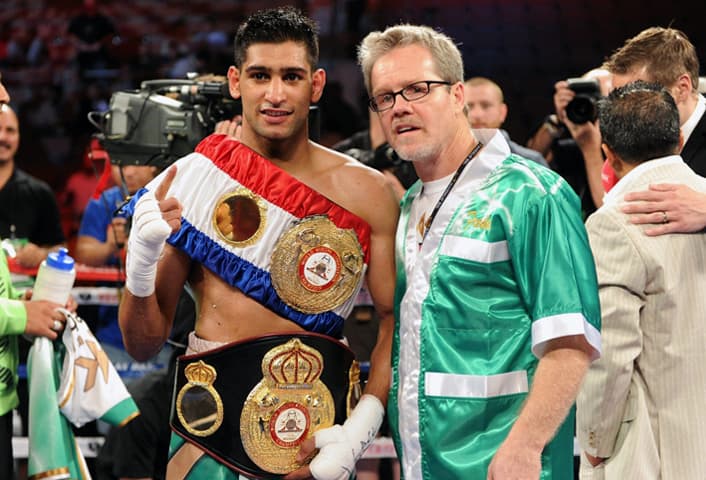
Founder story
Amir Khan's charity work grew from a public sporting career into a Foundation focused on practical help.
The Amir Khan Foundation was established in 2014. It now supports food, clean water, healthcare, housing and long-term community work.
Amir Khan won an Olympic silver medal for Great Britain in the lightweight division at Athens 2004. He was 17, making him the UK's youngest Olympic boxing medallist. The Olympic record provides the result and the age at which it was achieved.
He later became a two-time World Boxing Champion. His recognised championship record includes world titles at super-lightweight, recorded by the World Boxing Association and the International Boxing Federation.
Those facts explain why boxing is part of the Foundation's history. This page is not a guide to bouts or sporting news. It records the route from a sporting career to the charity work that carries Amir Khan's name.
Each programme has a defined purpose. Active donation routes lead to the relevant programme, while the Champion Centre remains an awareness project in development.
Mobile food banks and organised distributions help families facing food poverty in Pakistan and the UK.
Read about this programmeDefined bore-pump, pipeline and solar-water projects provide practical access to safer water.
Read about this programmeSupport for medicines, essential supplies and subsidised care helps patients who cannot afford treatment.
Read about this programmeFamily-home projects in Afghanistan provide vulnerable households with stable, lasting shelter.
Read about this programmeThe Champion Centre is being developed around food, health, education, sport and social mobility.
Read about this programmeAK Academy forms part of the Foundation's programme history. It supported boxing, fitness and mentoring opportunities for young people in Bolton, Peterborough and Islamabad. It is not currently open for donations, but it established a clear link between sport and youth development in the Foundation's work.
The Champion Centre carries that experience into a wider model. Its sport and youth pillar includes a boxing gym, mentoring and safe spaces. It sits alongside food security, health access, education and social mobility. The first centre is planned for Rawalpindi, and the project remains in development.
The Foundation's programme pages separate current donation routes from projects that are still being planned. Food support, clean water, healthcare and family homes each have a published route that explains what a donation can support. The Champion Centre page asks people to follow its development rather than give to an unfinished funding offer.
This distinction matters for someone searching for Amir Khan's charity work. Sporting recognition explains how the public first knew the founder, but the work itself is shown by programme purpose, current donation options and the delivery evidence AKF records. Readers can move from this history to the programme that answers the kind of support they want to provide.
Supporters can read the confirmed programme pages before choosing where to give. Donations can be directed to active appeals and programmes through the Foundation's secure donation route.